Both the AeroPress and the French press are beloved manual brewing methods that produce excellent coffee without electricity. They're both affordable, both have passionate fans, and both produce distinctly different cups. If you're choosing between them - or wondering whether one deserves a place in your kitchen alongside the other - this comparison covers everything that matters.
The fundamental difference: the AeroPress uses pressure and a paper filter for a clean, concentrated cup; the French press uses immersion and a metal filter for a heavier, oilier, full-bodied cup. Both can make genuinely excellent coffee - but they suit different preferences and lifestyles.
How Each Method Works
The French press is an immersion brewer: coarsely ground coffee steeps in hot water for 4 minutes, then a metal mesh plunger is pressed down to separate the grounds from the liquid. The metal filter allows coffee oils and fine particles to pass through into the cup, producing a rich, heavy-bodied brew with some texture and sediment at the bottom.
The AeroPress combines immersion and pressure: medium-fine ground coffee steeps briefly (30 seconds to 2 minutes depending on recipe), then you press a plunger through a tube, forcing the coffee through a paper filter and into your cup. The paper filter catches oils and fine particles, producing a cleaner cup. The pressure of pressing also affects extraction differently than simple immersion, allowing shorter brew times without sacrificing fullness.
Flavor: What Each Cup Tastes Like
The flavor difference is significant and worth understanding before you choose.
French press coffee is heavy, textured, and full-bodied. You taste the oils - the same compounds that add richness to dark chocolate and are responsible for much of coffee's perceived "strength." The flavor is rounded, warm, and satisfying in a comfort-food way. There's usually some sediment in the bottom of the cup. Bright acidity and delicate flavors are somewhat muted by the heavy extraction and metal filter.
AeroPress coffee varies more based on your recipe, but the paper filter's characteristic is cleanliness. The cup is brighter, cleaner, and more focused than French press. Nuanced flavors - fruit notes, floral aromatics in light roasts - come through more clearly. The texture is less heavy than French press but can still be full-flavored and concentrated if you use a short steep and less dilution.
AeroPress
- Clean, bright, focused flavor
- Ready in 1–2 minutes
- Near-indestructible plastic - perfect for travel
- Almost no cleanup - pop the puck out, rinse
- Extremely versatile - hundreds of published recipes
- Requires paper filters (ongoing cost, small)
French Press
- Heavy, oily, full-bodied flavor
- 4-minute steep - less hands-on but not faster
- Glass carafe requires careful handling
- Grounds need rinsing/disposal - messier cleanup
- Makes larger batches easily (2–8 cups)
- No consumables needed after purchase
Cleanup: A Meaningful Practical Difference
If you've ever had a French press explode grounds into your kitchen sink drain, you know cleanup matters. French press cleanup requires: disposing of grounds (ideally not down the drain - they clog), rinsing the metal filter mesh, disassembling and washing the plunger assembly, and cleaning the carafe. It takes 3–5 minutes and requires more attention than most people expect.
AeroPress cleanup is genuinely fast: hold it over the trash, press the plunger fully to pop the coffee puck into the bin, and rinse the tube. The rubber seal stays clean and the whole thing is dishwasher safe. For a busy morning, this is not a trivial difference.
Travel and Portability
The AeroPress wins here decisively. It's made from BPA-free copolyester plastic that can be dropped, thrown in a bag, and survive rough handling. It's used by hikers, frequent flyers, hotel-room coffee refuseniks, and anyone who wants good coffee away from home. The original AeroPress Go was designed specifically for travel and includes a collapsible cup.
French press can travel, but glass carafes are fragile. Some French presses use insulated stainless steel, which is more durable, but they're heavier and bulkier than an AeroPress. For travel, the AeroPress is the clear choice.
Batch Size: French Press Has the Advantage
The AeroPress makes one cup at a time (with some recipes pushing to two small cups). This is a feature for people who make single cups, but a limitation for anyone who regularly makes coffee for multiple people.
French presses come in 3-cup, 4-cup, 8-cup, and larger sizes, easily brewing for two or more people in the same time it takes to make one AeroPress cup. For households or offices where multiple people want coffee simultaneously, French press scales up naturally.
The Gold Standard for Home and Travel
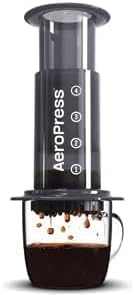
AeroPress Coffee and Espresso Maker - $40
The AeroPress has earned its reputation across millions of coffee drinkers worldwide: clean cups, near-instant cleanup, and essentially indestructible build quality. It's the most versatile manual brewer available - you can replicate anything from espresso-strength concentrate to a clean filter-style cup depending on your recipe. If you own only one manual brewing device, this is the most defensible choice.
Check it out →A French Press Worth Keeping
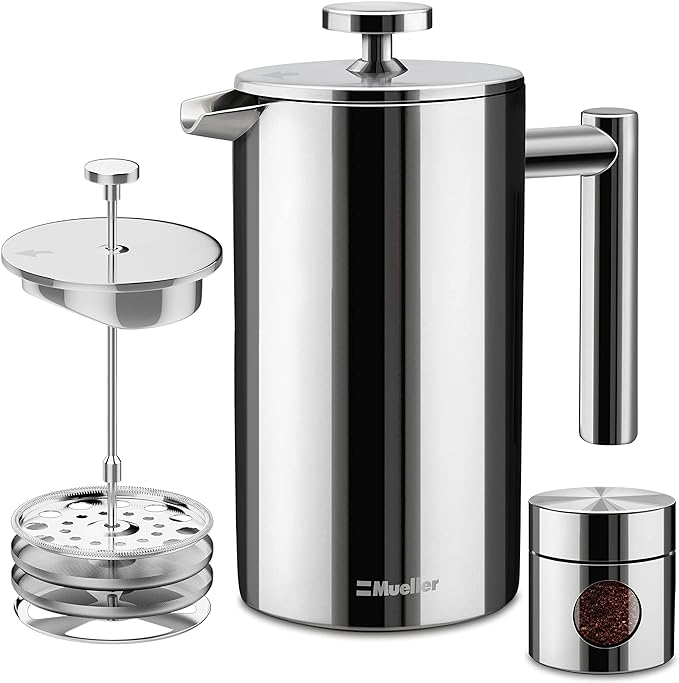
Mueller French Press Coffee Maker - $34
A well-made French press is a kitchen staple. Mueller's version has a double-wall stainless steel construction that keeps coffee hot longer than glass and eliminates the fragility problem. The mesh filter is fine enough to reduce sediment without sacrificing the heavy body that makes French press distinctive. If you brew for two or more people and love full-bodied coffee, it's a hard choice to argue against.
Check it out →Frequently Asked Questions
Which makes stronger coffee - AeroPress or French press?
AeroPress has an edge here, because you can easily brew a concentrated shot by using a high coffee-to-water ratio (1:6 or even 1:4) and pressing into a small amount of water. French press is typically brewed at 1:12 to 1:15 ratio. However, French press coffee feels heavy and strong because of the oils and fine particles that pass through the metal filter - it's not necessarily higher in caffeine, but it has more body and presence. Both can produce strong, satisfying coffee by adjusting the ratio.
Is AeroPress coffee better than French press?
Neither is objectively better - they produce different cups that suit different preferences. AeroPress produces a cleaner, brighter cup where origin flavors are more distinct. French press produces a heavier, richer cup with more body and texture. If you prefer clarity and nuance, AeroPress is better for you. If you prefer richness and body, French press is better. Many coffee enthusiasts own both and choose based on mood or what beans they're using.
How long does each method take to brew?
AeroPress takes 1–2 minutes of total brew time (including a 30–60 second steep and 20–30 seconds of pressing). French press takes 4–5 minutes (a 4-minute steep plus pressing and pouring time). Including heating water and grinding, AeroPress is ready in about 3–4 minutes, French press in about 6–8 minutes. AeroPress is the faster method for a single cup, though the time difference isn't dramatic.
Can I make espresso with an AeroPress?
Not true espresso - espresso requires 9 bars of pressure, and the AeroPress generates 0.5–0.75 bars. But you can make an espresso-style concentrate that approximates the strength and intensity: use a fine grind, a 1:4 to 1:6 coffee-to-water ratio, and press firmly. The result is a small, concentrated shot you can use as a base for milk drinks, dilute with hot water for an Americano-style drink, or drink straight. It won't have real espresso crema, but the flavor is strong and enjoyable.
Which is easier to use for a coffee beginner?
French press is arguably easier to start with - it has fewer steps and is more forgiving of timing. Steep for 4 minutes, press, pour. The AeroPress has more variables (grind size, steep time, pressing speed, inverted vs standard method) but also more room for experimentation as you get more comfortable. For beginners who want simplicity, French press is easier to learn. For beginners who enjoy tinkering, AeroPress has a higher ceiling and a massive community sharing recipes online.
Essential Gear for Either Method
Fresh Grounds Make All the Difference
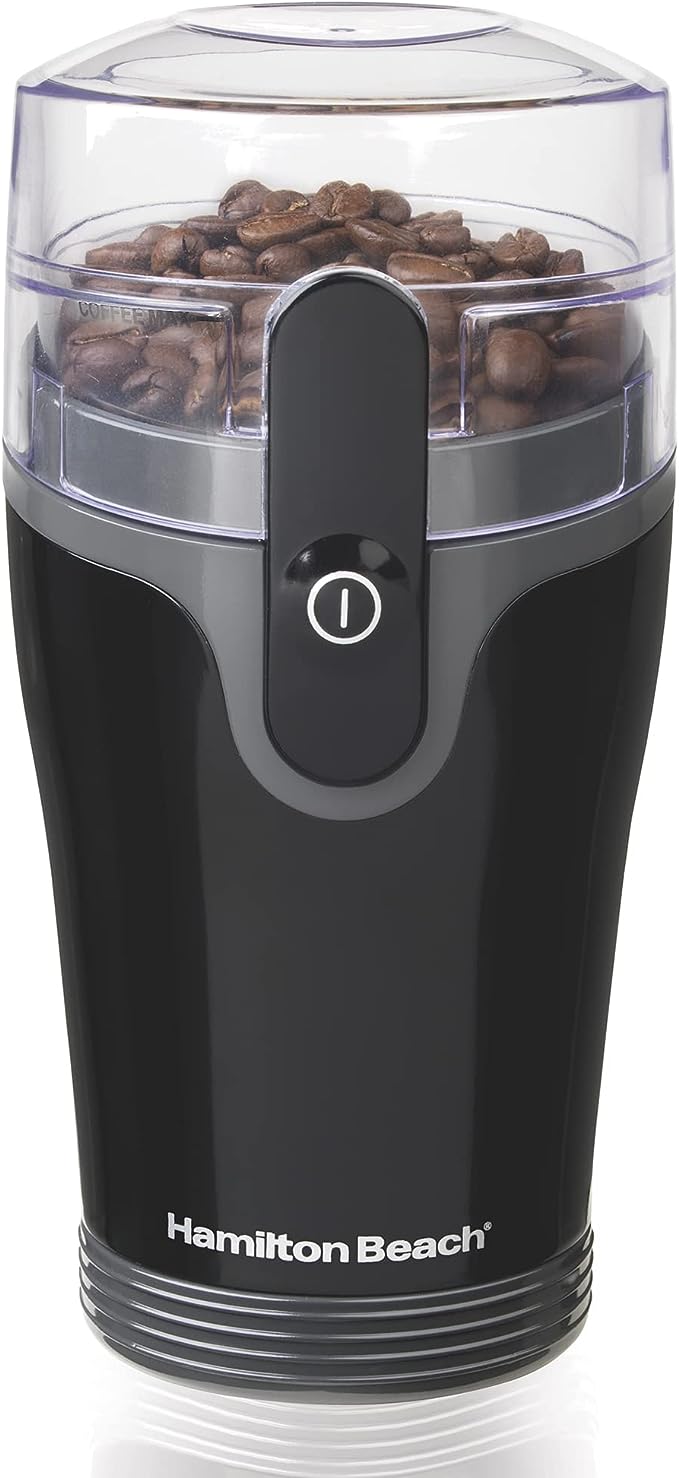
Hamilton Beach Fresh Grind Electric Coffee Grinder - $18
Both the AeroPress and French press benefit enormously from freshly ground beans. This grinder handles the medium-fine grind for AeroPress and the coarse grind for French press at an unbeatable price.
Check it out →Dial In Your Water Temperature
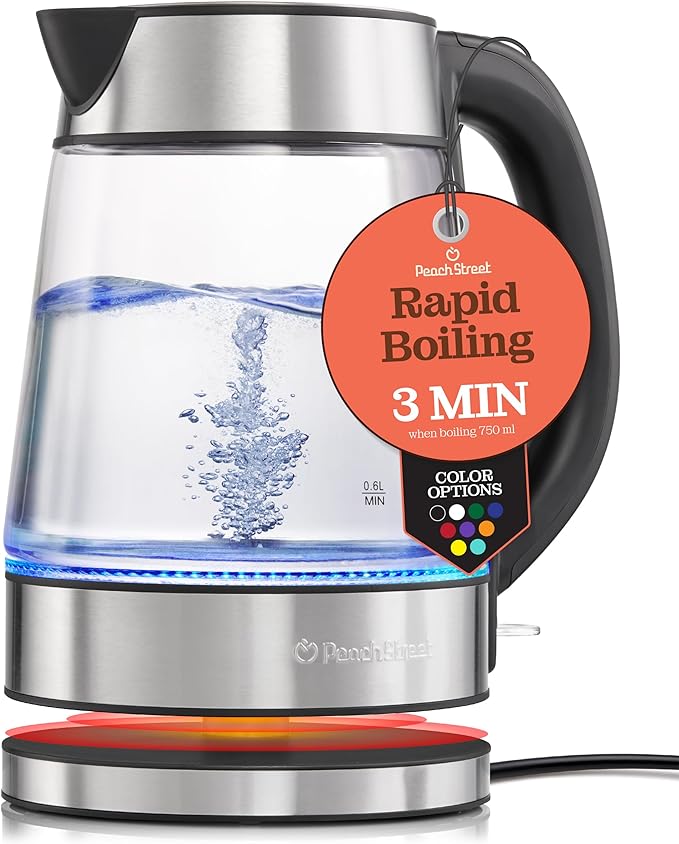
Speed-Boil Electric Kettle - $22 (50% Off)
Both methods need water at 195-205°F. Boiling water (212°F) will over-extract and taste bitter. An electric kettle gets you there fast and consistently.
Check it out →Keep Your Beans Fresh
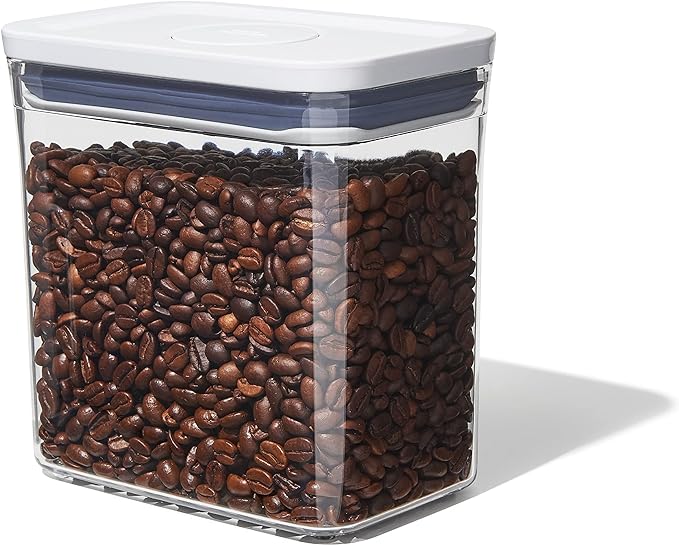
Good Grips POP Container - $12
Whole beans stay fresh for weeks in an airtight container. Without one, you'll notice stale flavors within days of opening the bag.
Check it out →Verdict by Use Case
Choose the AeroPress if you: make one cup at a time, travel frequently, hate cleanup, want to experiment with different recipes and flavor profiles, or prefer a clean and bright cup. The AeroPress is the single most versatile manual brewing device available and is hard to argue against as a first or only manual brewer.
Choose the French press if you: regularly brew for two or more people, prefer a heavier and more full-bodied cup, want a brewing method with no consumable costs, or love the ritual of a slower, less fussy brew. An insulated stainless steel French press is particularly good - it keeps coffee hot, eliminates glass fragility, and produces the same excellent heavy-bodied cup.
If you can only buy one: the AeroPress's versatility, durability, and cleanup convenience make it the more broadly useful choice for most people. But if you often make coffee for more than one person, the French press's capacity advantage is significant.