If you've decided that pour over is your brewing method, you've almost certainly run into the Chemex vs Hario V60 debate. These are the two most respected pour over brewers in the world - both produce exceptionally clean, nuanced coffee, both sit on countertops in coffee shops and serious home kitchens everywhere, and both have passionate defenders who argue theirs is simply the better brewer.
The truth is they're different tools that produce different results. Understanding those differences helps you pick the right one for your taste, skill level, and lifestyle - rather than buying based on which one looks cooler (though that's a legitimate factor, and they both look great).
Quick Comparison: At a Glance
| Feature | Chemex | Hario V60 |
|---|---|---|
| Price (brewer) | $40–$55 | $15–$35 |
| Flavor Profile | Clean, sweet, slightly heavier body | Bright, delicate, maximum clarity |
| Brew Time | 4–6 minutes | 2.5–4 minutes |
| Difficulty | Medium - forgiving with correct grind | Medium-High - technique-sensitive |
| Filter Thickness | Thick (20–30% thicker than standard) | Thin (standard paper filter) |
| Filter Cost | ~$12–$16 per 100 | ~$8–$12 per 100 |
| Batch Size | 3, 6, 8, 10-cup options | 01, 02, 03 sizes (1–6 cups) |
| Grind Size | Medium-coarse | Medium to medium-fine |
| Best For | Multiple cups, display-worthy design | Single cups, maximum flavor precision |
Start With Pour Over Today
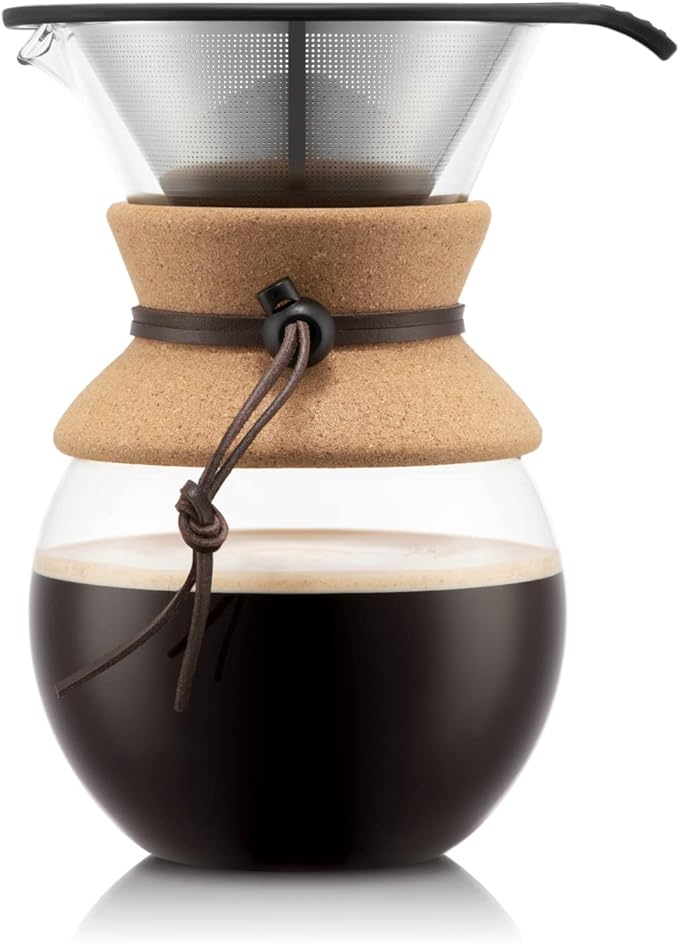
BODUM Pour Over Coffee Maker - $19
If you're new to pour over and not ready to commit to a Chemex or V60, the BODUM is the perfect starting point. High-quality borosilicate glass carafe, permanent stainless steel filter (use with or without paper), and a clean design that looks great on any counter. At $19, it's the easiest way to discover whether pour over is your method.
Check it out →The Chemex: Bold Design, Forgiving Brew
The Chemex has been made the same way since 1941 in Chicopee, Massachusetts. The borosilicate glass carafe and wood-and-leather collar are unmistakable - it's been displayed at the Museum of Modern Art. But aesthetics aside, what makes the Chemex distinctive is its proprietary thick paper filter.
The Chemex Filter: The Key Difference
Chemex filters are 20 to 30 percent thicker than standard paper filters. This thickness is the most important thing to understand about how the Chemex tastes. The thick filter:
- Traps more coffee oils and fine particles than thinner filters
- Produces an exceptionally clean, very clear cup
- Slows the brew slightly, allowing for more even extraction
- Creates a slightly sweeter, less acidic flavor profile than you'd expect from pour over
This also means the Chemex is somewhat forgiving of inconsistent pouring technique. The thick filter acts as a buffer - it slows water that comes in too fast and evens out extraction. For beginners to pour over, this forgiveness is valuable.
Chemex Flavor Profile
Chemex coffee is exceptionally clean, slightly sweet, with a light-to-medium body. The thick filter removes more oils than a V60, producing a cup that's incredibly clear - almost tea-like in its transparency. Bright, fruity notes come through clearly, but the Chemex has a gentler acidity than the V60. If pour over coffee has ever tasted too acidic or sharp to you, the Chemex may actually be your answer.
Brewing with the Chemex
The standard Chemex recipe: use a 1:15 to 1:17 ratio (e.g., 42g coffee to 700ml water for a 6-cup Chemex). Grind to medium-coarse - slightly coarser than you'd use for a V60. Rinse the filter with hot water before brewing. Bloom with 80–100ml of water for 45 seconds. Then pour in slow, circular pulses every 30 seconds, filling gradually to your target weight. Total brew time: 4 to 6 minutes.
If your Chemex is taking more than 6 minutes, coarsen your grind. Under 4 minutes, grind finer.
Hario V60: Maximum Control, Maximum Clarity
The Hario V60 (named for its 60-degree cone angle) is the precision instrument of pour over brewing. Available in ceramic, glass, plastic, and metal, in sizes 01 (1–2 cups), 02 (1–4 cups), and 03 (1–6 cups), the V60 is the brewer that specialty coffee shops around the world use when they want to showcase the characteristics of their beans.
The V60 Design: Why It Matters
The V60's cone has a large single hole at the bottom and distinctive spiral ridges along the interior walls. These ridges hold the filter away from the cone, allowing airflow and letting the brew drain at whatever rate the grounds allow. The large single opening means the V60 drains quickly - faster than the Chemex. This fast drain means:
- Brew time is shorter (2.5 to 4 minutes)
- Your pour technique has a bigger impact on the outcome
- You have more control over extraction by varying pour speed
- The cup is brighter and more acidic than Chemex at the same ratio
V60 Flavor Profile
V60 coffee is bright, light-bodied, and extremely clear. The standard V60 paper filter is thinner than the Chemex filter, so slightly more oils pass through - but the main characteristic of the V60 cup is its brightness and precision. Subtle flavor notes that would be muted in other methods come through clearly. Ethiopian beans brewed in a V60 will show their floral, blueberry, and wine-like characteristics more fully than in any other brewer. This clarity is why specialty coffee professionals reach for the V60 when they want to evaluate a bean's characteristics.
The flip side: the V60 is more technique-sensitive. Inconsistent pouring - too fast, too slow, uneven - shows up in the cup more than in a Chemex.
Brewing with the V60
Standard V60 recipe for a 02 size: use 1:15 to 1:16 ratio (e.g., 25g coffee to 400ml water). Grind to medium - a touch finer than Chemex, similar to coarse table salt. Rinse the filter. Bloom with 50ml for 30–45 seconds. Then pour in 3–4 pours of roughly equal volume, each starting in the center and spiraling outward. Total time: 2.5 to 4 minutes.
The Pour Over Essential: A Gooseneck Kettle
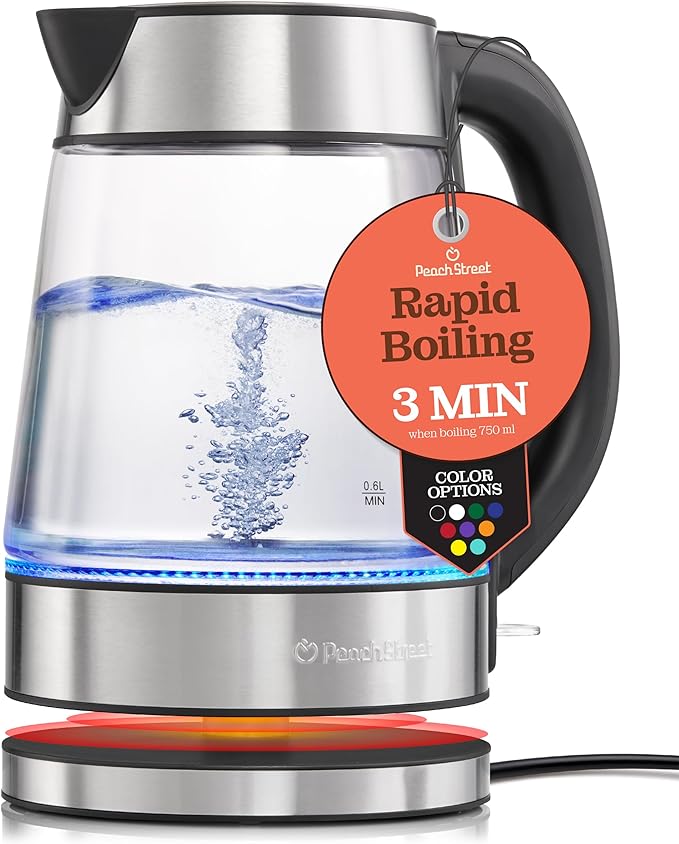
Speed-Boil Electric Kettle - $22 (50% Off)
Whether you go Chemex or V60, a kettle that heats fast and pours with control makes a noticeable difference. This one reaches a full boil in under 3 minutes and has a wide enough spout for controlled pouring. At 50% off it's one of the best-value pour over upgrades you can make.
Check it out →Head-to-Head: Key Differences
Flavor
Chemex
Clean, sweet, gentle acidity. The thick filter produces a cup that's almost wine-like in clarity but with slightly more body than V60. Less sharp, more balanced. Great for medium and light roasts. More accessible to people who find pour over too acidic.
Hario V60
Bright, complex, highest clarity. The V60 showcases the full range of a bean's flavor characteristics with vivid precision. Higher perceived acidity and brightness. Ideal for showcasing single-origin light roasts and specialty beans.
Ease of Use
Chemex
More forgiving. The thick filter slows extraction and evens out pours. You can pour somewhat inconsistently and still produce a good cup. Better for pour over beginners or those who prefer a less hands-on morning routine.
Hario V60
More technique-sensitive. The thin filter and large drain hole mean your pour technique has a direct impact on flavor. Fast pouring over-extracts; slow pouring under-extracts. Rewards practice but has a steeper learning curve.
Batch Size and Serving
Chemex
Brews directly into a carafe, making it ideal for multiple cups or serving guests. The 6-cup and 8-cup sizes are very popular for households. Coffee stays warm in the glass carafe for 15–20 minutes. Beautiful enough to serve directly at the table.
Hario V60
Drips into a separate vessel (you need to buy or have a carafe, server, or just brew directly into a mug). Better suited for single-cup or two-cup brewing. The VD-02T server set includes a matching carafe. If you brew for one, the V60 is more efficient.
Cost
Chemex
$40–$55 for the brewer. Filters cost $12–$16 per 100 - more expensive than V60 filters, but the difference over a year of daily brewing is only about $10–$20. A minor consideration.
Hario V60
$15–$35 for the brewer (plastic is cheapest; ceramic and glass cost more). Filters cost $8–$12 per 100. Significantly cheaper upfront, especially if you choose the plastic dripper, which actually brews just as well as glass or ceramic.
Which One Should You Choose?
Choose Chemex If You:
- ✅ Want a beautiful brewer that doubles as décor
- ✅ Brew multiple cups at once for a household
- ✅ Are newer to pour over and want more forgiveness
- ✅ Prefer sweeter, slightly fuller-bodied pour over
- ✅ Find pour over coffee sometimes too acidic or sharp
- ✅ Want a brewer that goes straight from counter to table
- ✅ Use medium roasts more than very light roasts
- ✅ Want to impress guests with the brewing setup
Chemex is for you if: You want exceptional coffee and something beautiful on your counter. Its forgiving nature and batch-brewing capability make it the better choice for daily household use.
Choose Hario V60 If You:
- ✅ Want maximum brightness and flavor clarity
- ✅ Usually brew one cup at a time
- ✅ Are a coffee enthusiast who enjoys dialing in technique
- ✅ Brew specialty single-origin light roasts
- ✅ Want precise control over every pour
- ✅ Are looking for a more affordable entry point
- ✅ Want a compact, portable dripper for travel
- ✅ Love experimenting with different recipes and variables
V60 is for you if: You want to get the most out of your beans and enjoy the craft of brewing. It's the choice of coffee professionals for a reason - nothing shows off great beans better.
The Case for Owning Both
Many serious coffee drinkers own both, and it's not as redundant as it sounds. The V60 for single cups and experimenting with new beans - it's fast, compact, and reveals every characteristic of a new roast. The Chemex for weekend mornings when you're brewing for two people and want something beautiful sitting on the table. Total investment: under $80 for quality versions of both. A very reasonable price for two genuinely different brewing experiences.
Dial In Your Recipe With a Scale
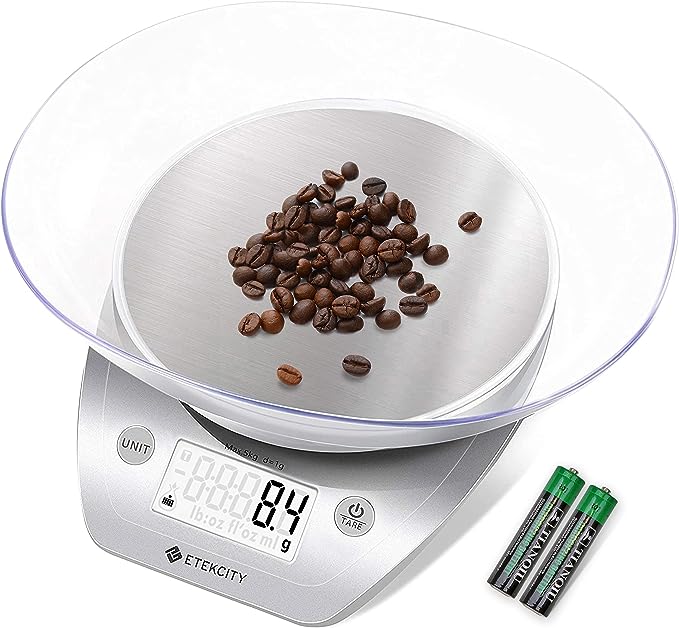
Etekcity Digital Kitchen Scale - $18
Both the Chemex and V60 reward precision. A kitchen scale is the fastest way to improve your pour over consistency - weigh your coffee and water instead of scooping and estimating. This scale reads to 0.1g, includes a built-in timer, and is accurate enough for any brewing method. A must-have for either brewer.
Check it out →What About the Kalita Wave?
Worth a brief mention: the Kalita Wave is a third major pour over option with a flat-bottom dripper and three small holes. It's the most forgiving of all three - even more so than the Chemex - and produces a slightly fuller body than both. It's an excellent choice for beginners, but its flat-bottom design is harder to clean thoroughly and the proprietary wave filters are harder to find outside of specialty stores. If the V60 and Chemex are both too technique-demanding for you, the Kalita Wave is worth considering.
Frequently Asked Questions
Does the Chemex or V60 make better coffee?
Neither is objectively better - they produce noticeably different cups. The Chemex produces a cleaner, sweeter cup with a gentle body, thanks to its thick filter. The V60 produces a brighter, more complex cup with maximum clarity. Which is "better" depends entirely on your taste preference and what roast you're brewing. For light, high-quality single-origin beans, most specialty coffee drinkers prefer the V60's clarity. For balanced medium roasts brewed in larger batches, the Chemex often wins.
Is the Chemex good for beginners?
Yes - the Chemex is one of the more forgiving pour over brewers, largely because its thick filter slows extraction and compensates for somewhat uneven pouring. The main learning curve with the Chemex is grind size: too fine and it stalls; too coarse and it drains too fast. Once you've dialed in a medium-coarse grind that produces a 4–5 minute brew, the Chemex is fairly consistent and beginner-friendly. It's also large enough to brew multiple cups, which is practical for households.
Can I use regular coffee filters in a Chemex?
No. The Chemex requires its own proprietary square or round filters, which are thicker than standard paper filters. Using a standard filter in a Chemex won't seal properly and will produce different (generally worse) results. Chemex filters are widely available online and in specialty stores. They're more expensive per filter than V60 filters, but the difference over a year of daily brewing is minimal - roughly $10–$20 more annually.
Does the material of the V60 (plastic vs ceramic vs glass) affect flavor?
In blind taste tests, most people can't reliably distinguish coffee brewed in plastic, ceramic, or glass V60s. The functional difference is heat retention: ceramic and glass retain heat better than plastic during the brew, which can slightly affect extraction consistency. In practice, rinsing any V60 thoroughly with hot water before brewing compensates for this. The plastic V60 ($15–$20) brews just as well as the ceramic or glass versions ($25–$35) - the material choice is more about aesthetics and durability than flavor.
Do I need a gooseneck kettle for Chemex or V60?
Technically no, but practically yes - especially for the V60. The V60 is technique-sensitive and controlling your pour is essential to consistent results. A gooseneck kettle gives you precision control over water flow and placement, which is the difference between a good and excellent V60 cup. The Chemex is somewhat more forgiving, but a gooseneck still produces noticeably better results. Basic gooseneck kettles start around $25. Temperature-controlled models ($50–$100) are excellent if you brew different roast levels that prefer different temperatures.
The Verdict
If you're choosing one: for household brewing, the Chemex wins on versatility, capacity, and approachability. For single-cup precision and showcasing exceptional beans, the V60 is the professional's choice. Neither will disappoint you - these are two of the finest brewers ever made, and coffee from either one outclasses anything from a drip machine at double the price.
Pick based on your priorities: batch size, technique interest, flavor preference, and how important the aesthetic is to you (and it's okay if it is - beautiful objects make the morning ritual better).