Here's the truth most people learn the hard way: your grinder matters more than your espresso machine. A $500 machine with a bad grinder will produce worse espresso than a $150 machine paired with a quality burr grinder. Espresso extraction is unforgiving - inconsistent particle size causes channeling, uneven extraction, and shots that taste bitter or sour no matter how good your beans are.
The good news: you don't need to spend $700 on a grinder to make excellent home espresso. The $150–$250 range has some genuinely impressive options. Here are the best espresso grinders at every budget, tested and ranked.
Top 5 Espresso Grinders for Home
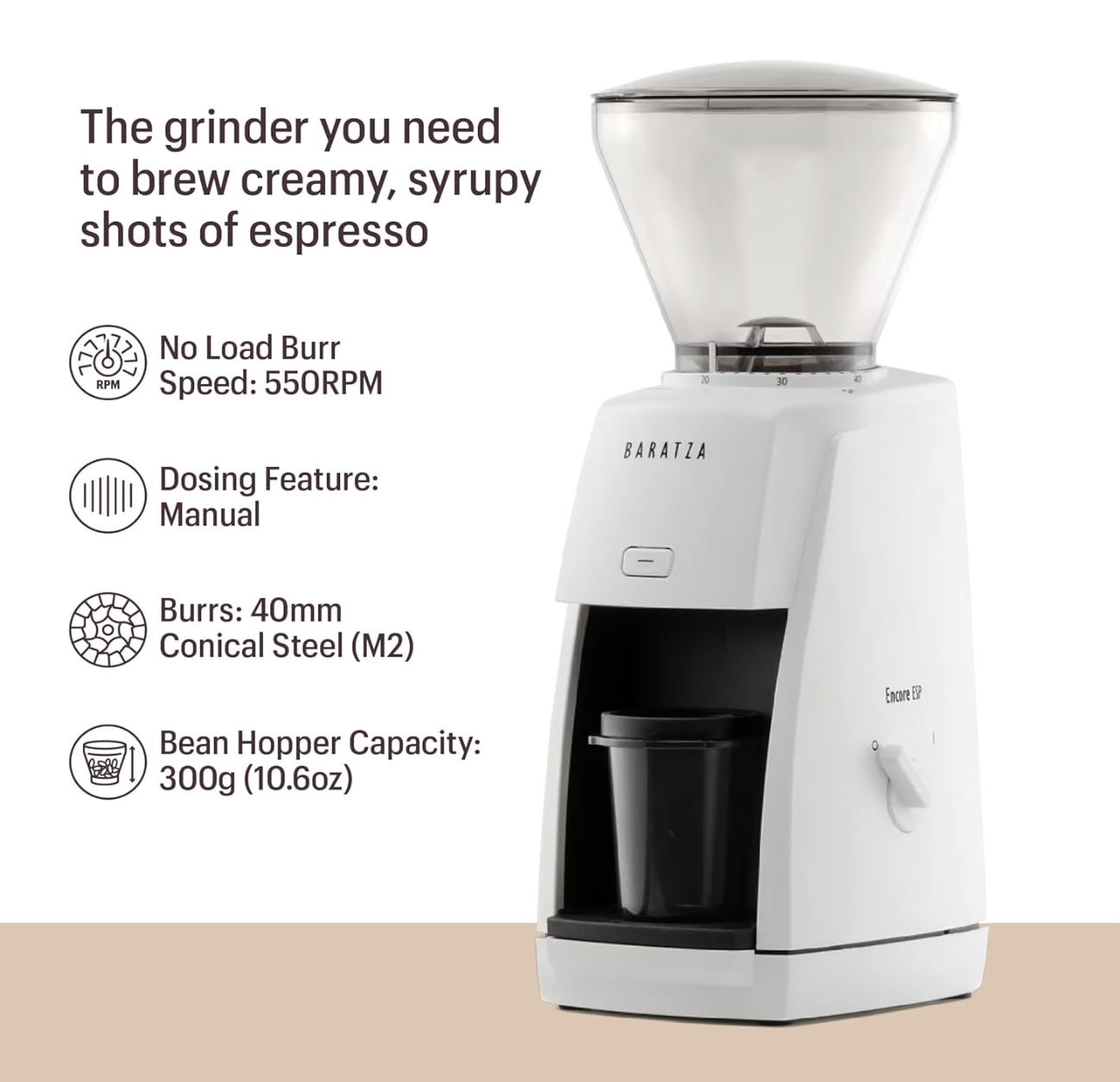
Baratza Encore ESP
Best for: Home espresso beginners who want a dedicated espresso grinder
Burr size: 40mm conical steel burrs
Why we love it: The Encore ESP is specifically designed for espresso - it's the espresso-optimized version of Baratza's legendary Encore. It has 40 grind settings with micro-adjustments in the espresso range, a built-in scale holder tray, and Baratza's best-in-class customer support and repairability. This is the grinder most home baristas recommend to beginners, and for good reason.
Check it out →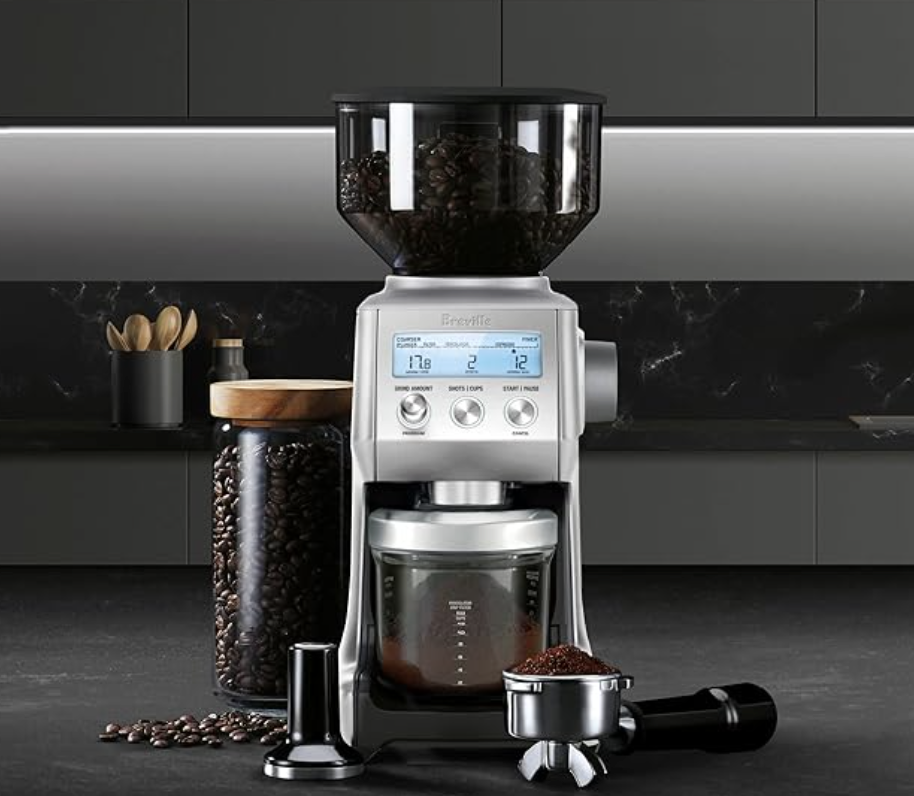
Breville Smart Grinder Pro (BCG820BSS)
Best for: Those who want maximum flexibility across all brew methods
Burr size: 40mm stainless steel conical burrs
Standout feature: 60 grind settings covering espresso through cold brew, programmable dose by time, and a digital display. The Breville Smart Grinder Pro is one of the most versatile grinders at this price - perfect if you want one grinder to do everything from espresso to French press.
Check it out →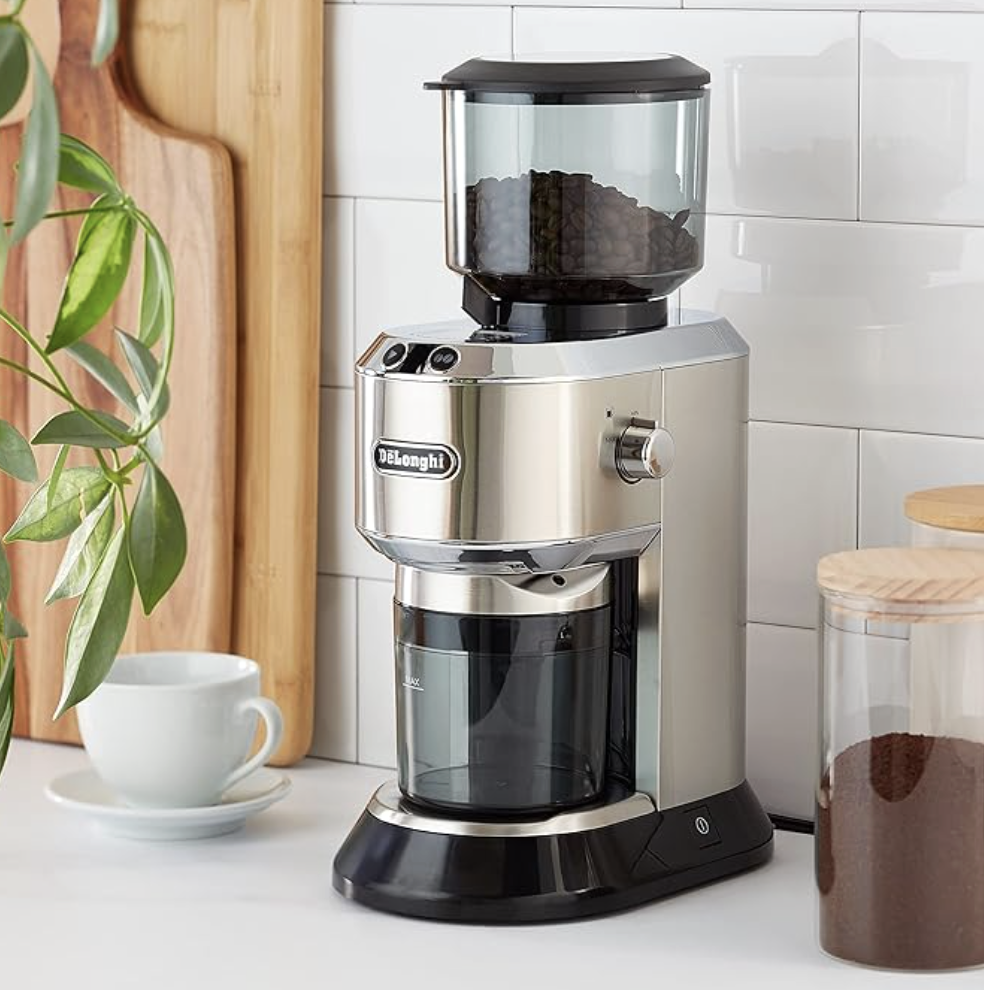
De'Longhi Dedica Style Grinder (KG521M)
Best for: De'Longhi machine owners who want a matching set
Burr size: 50mm flat steel burrs
Standout feature: Larger flat burrs than most competitors at this price, which can produce more uniform grinds. Designed to pair with De'Longhi espresso machines and fits the Dedica's slim footprint. The 18-setting dial is straightforward, and the built-in timer dose control works well once calibrated.
Check it out →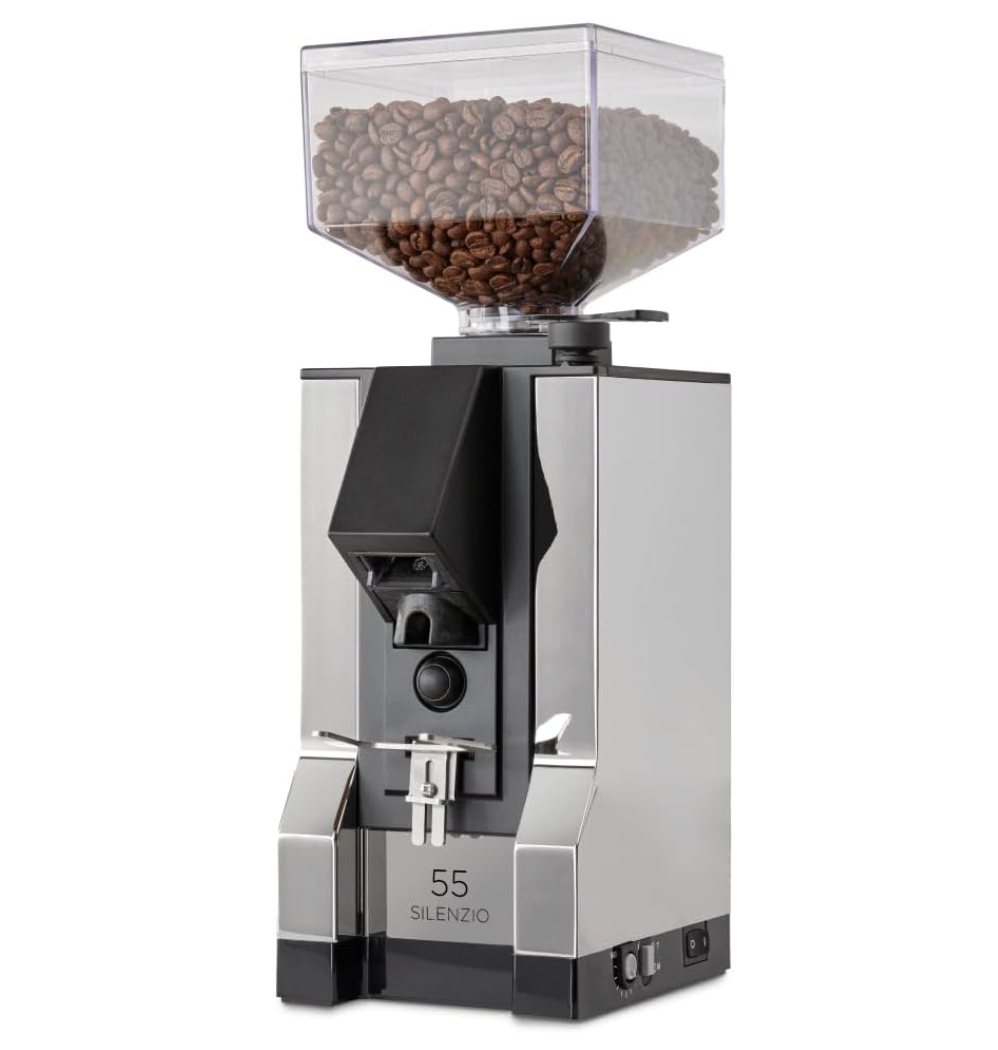
Eureka Mignon Silenzio
Best for: The enthusiast ready to invest in a serious setup
Burr size: 50mm flat chrome-treated steel burrs
Standout feature: Near-silent operation (hence "Silenzio"), exceptional grind consistency, and stepless micrometric adjustment for precise espresso dialing. The Eureka Mignon is an Italian-made commercial-quality grinder that's widely considered the benchmark for home espresso in its price class.
Check it out →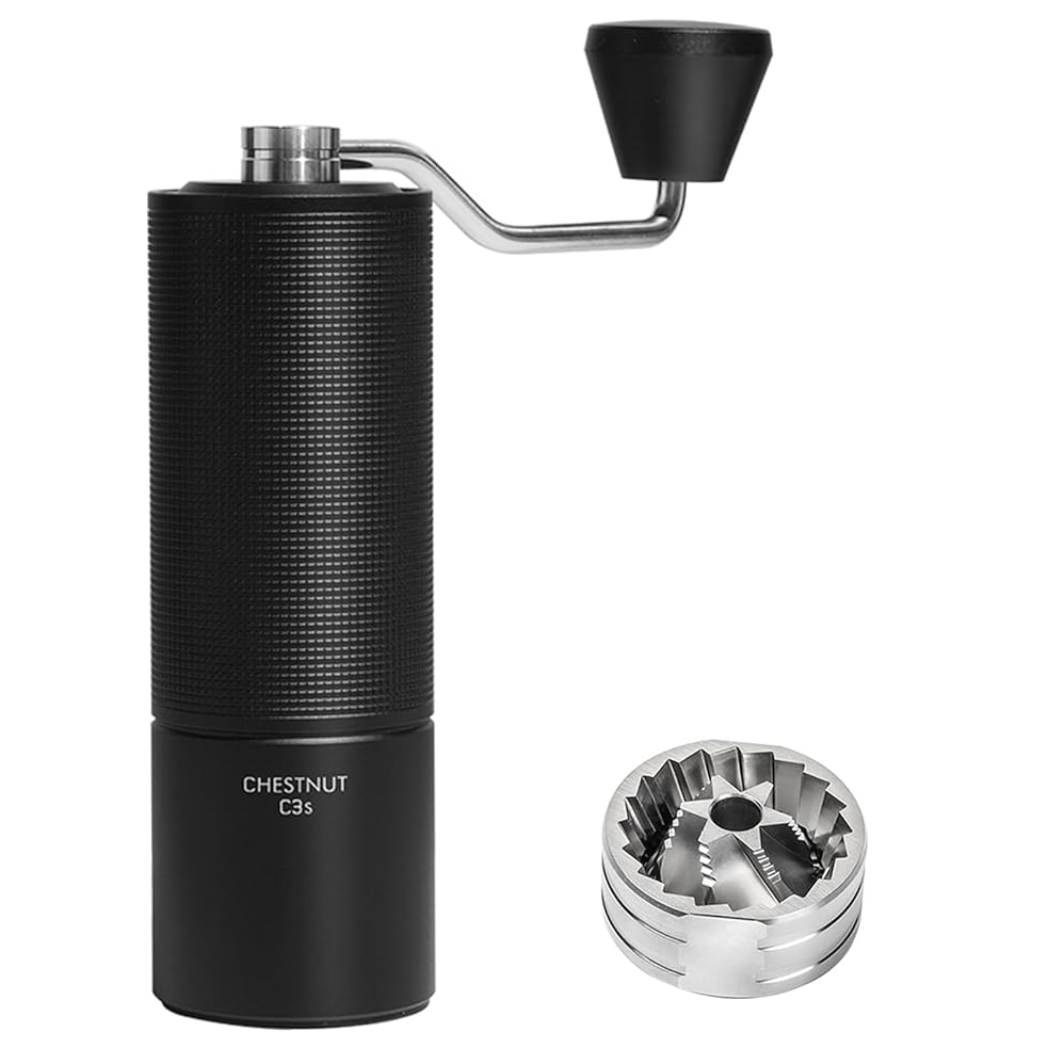
Timemore Chestnut C3 Pro (Manual)
Best for: Budget-conscious buyers willing to grind by hand
Burr size: 38mm stainless steel conical burrs
Standout feature: Manual grinding sounds like work, but the Timemore C3 Pro has become a cult favorite for good reason. Its burrs produce grind consistency that rivals electric grinders twice its price. No motor noise, extremely portable, and the stepless adjustment allows precise espresso dialing. The trade-off: grinding a double shot takes about 60-90 seconds of hand cranking.
Check it out →What Makes a Good Espresso Grinder
⚙️ Burr Type: Conical vs Flat
Both conical and flat burrs can produce excellent espresso. Conical burrs (like the Baratza Encore ESP) tend to be quieter and produce slightly more varied particle sizes, which some espresso lovers prefer for complexity. Flat burrs (like the Eureka Mignon) generally produce more uniform particle sizes, which aids extraction consistency. Both work well - don't get too hung up on this at the beginner level.
🔢 Grind Settings and Adjustment
Espresso is extremely sensitive to grind size - even a small adjustment changes your shot significantly. Look for grinders with stepped or stepless micro-adjustment in the fine range. A grinder with only 5-10 total settings across all brew methods is too coarse for proper espresso dialing. Aim for at least 15 settings in the espresso range specifically.
Stepless vs stepped: Stepless adjustment (infinite settings) gives you more precision. Stepped (fixed click-stops) is easier to return to your preferred setting after cleaning.
⚡ Grind Speed and Heat
Faster grinding generates more heat, which can affect flavor. For espresso, you're only grinding 18-20 grams at a time - heat buildup isn't a serious concern at home volumes. Don't pay extra for a slow-speed grinder unless you're grinding large commercial quantities.
🧹 Retention and Clumping
Grind retention is how much coffee stays in the grinder after grinding. High retention means stale grounds mixing with fresh ones. For espresso, lower retention is better. Many budget grinders have 0.5–2g retention - minimal for home use. The Timemore manual grinder has near-zero retention, one reason it punches above its price.
Clumping: Coffee grounds tend to clump together due to static. A quick "Weiss Distribution Technique" (WDT - stirring grounds in the portafilter with a needle) solves this at any price point.
💰 How Much Should You Spend?
A useful rule: spend at least as much on your grinder as your machine. If you have a $100 espresso machine, a $100 blade grinder will hold you back - invest $150+ in a dedicated burr grinder and you'll immediately taste the difference. For a $300 Breville Bambino, pair it with the Baratza Encore ESP ($170) or Breville Smart Grinder Pro ($200) for a balanced setup.
Our #1 Pick: Baratza Encore ESP
Why We Love It
The Baratza Encore ESP earns the top spot because it's purpose-built for home espresso at an accessible price. Where the original Encore was a general-purpose grinder, the ESP version (Espresso/Scale/Pour-over) adds 40 stepped settings with genuine micro-adjustment in the espresso range - critical for dialing in shots precisely.
Baratza's reputation for repairability is unmatched in this category. Most parts are available for purchase separately, and the company actively supports repair over replacement. In a market full of disposable appliances, buying a Baratza means buying a grinder that can last 10+ years with basic maintenance.
The one area where it shows its price: grind consistency at the finest espresso settings isn't quite as uniform as the Eureka Mignon or higher-end options. For a home barista pulling 1-2 shots daily, this difference is academic. For someone chasing latte art-quality shots every time, the Eureka is worth the extra $230.
✅ Pros
- Purpose-built for espresso: 40 settings with precise micro-adjustment in the fine range
- Baratza quality: Known for durability and unmatched customer support
- Highly repairable: Parts widely available, Baratza actively supports long-term ownership
- Scale tray included: Built-in tray holds a small scale for dose-by-weight brewing
- Simple operation: On/off switch, no complicated programming needed
- Strong community: Huge online user base means lots of dialing-in guides and support
❌ Cons
- Not the most consistent at ultra-fine settings: High-end flat burr grinders outperform it for perfectionist espresso
- Plastic hopper: Some users upgrade to a glass or metal replacement
- Static can cause clumping: Common with low-humidity environments (WDT tool solves it)
- Not ideal for large doses: Best for 1-2 shots at a time
The Verdict
The Baratza Encore ESP is the grinder we recommend to almost everyone starting home espresso. It's the right tool for the job at a fair price, from a company that stands behind its products. Start here - and if you later get serious enough to want more, the Eureka or Niche Zero will be waiting.
Perfect for: Home espresso beginners, De'Longhi or Breville machine owners, anyone upgrading from a blade grinder
Skip if: You need to grind for multiple people at once, or you're already pulling competition-level shots and need absolute consistency
Frequently Asked Questions
Can I use a regular coffee grinder for espresso?
A blade grinder (like the Hamilton Beach Fresh Grind) will not produce good espresso. Blade grinders chop beans randomly, creating a mix of coarse chunks and fine powder. Espresso requires uniform, very fine particles - this inconsistency causes channeling and uneven extraction, resulting in sour or bitter shots regardless of your machine quality.
Even a cheap burr grinder is significantly better than a blade grinder for espresso. If you're serious about home espresso, a dedicated espresso burr grinder is a non-negotiable upgrade.
How fine should I grind for espresso?
Espresso requires a very fine grind - often described as the texture of powdered sugar or fine table salt. However, the "correct" grind size depends on your specific machine, beans, roast level, and even ambient humidity. There's no universal setting.
The best way to dial in: start medium-fine, pull a shot, and adjust. If the shot runs fast (under 20 seconds for a double) and tastes sour/weak, go finer. If it runs slow (over 35 seconds) and tastes bitter, go coarser. A well-dialed double shot should take 25-30 seconds to pull approximately 60ml.
Do I need to weigh my espresso grounds?
Technically no, but weighing dramatically improves consistency. A cheap kitchen scale ($15-20) used to weigh both your grounds (dose) and your output (yield) is one of the best upgrades you can make to your espresso routine.
Target: 18g of ground coffee in, 36-40g of espresso out (a 1:2 ratio), in 25-30 seconds. Once you hit those numbers and like the taste, you can replicate it every time. Without a scale, you're guessing.
How often should I clean my espresso grinder?
Wipe down the hopper and grounds chute weekly. Deep clean the burrs monthly or every 5-10 lbs of coffee - remove the burrs, brush out grounds, wipe with a dry cloth. Never use water on the burrs (they'll rust). You can run grinder cleaning tablets (like Urnex Grindz) through monthly to absorb oils without disassembly.
Signs your grinder needs cleaning: shots running inconsistently, stale or rancid taste, visible oil buildup on burrs.
Should I buy a single-dose or hopper grinder?
For home espresso, a single-dose approach (weighing out exactly what you need for each shot) produces fresher results and lets you easily switch between beans. Most budget grinders are hopper-style (you fill the hopper and it feeds beans), but you can use them single-dose by simply not overfilling.
The Timemore C3 Pro is naturally single-dose. The Baratza Encore ESP and Breville Smart Grinder Pro work fine either way. If you drink one or two coffees a day and value freshness, grind single-dose - it makes a noticeable difference.
What's the best grinder for a De'Longhi or Breville espresso machine?
For a De'Longhi Stilosa or similar entry-level machine: the Baratza Encore ESP ($170) is the most recommended pairing - it's better than the machine but won't bottleneck you as you improve. The De'Longhi Dedica Grinder ($150) is a matching option if aesthetics matter.
For a Breville Bambino Plus or Barista Express: the Breville Smart Grinder Pro ($200) is a natural match (same brand, designed to work together). The Baratza Encore ESP also pairs excellently. Note: the Barista Express already has a built-in grinder - if you buy that machine, you don't need a separate grinder to start.
The Right Grinder Changes Everything
If you've been struggling with inconsistent espresso shots, your grinder is almost certainly the culprit. Upgrading from a blade grinder or a cheap burr grinder to a dedicated espresso grinder like the Baratza Encore ESP is the single highest-impact improvement you can make to your home espresso setup.
Start with the Encore ESP if you're new - it's purpose-built for home espresso, priced fairly, and backed by the best support in the industry. If you already have a solid setup and want to level up, the Eureka Mignon Silenzio is where serious home baristas land.
Building Your Full Espresso Setup?
Pair the right grinder with the right machine
Complete Beginner Espresso Setup Guide →